
Report on the Jupyter Community Workshop on Dashboarding
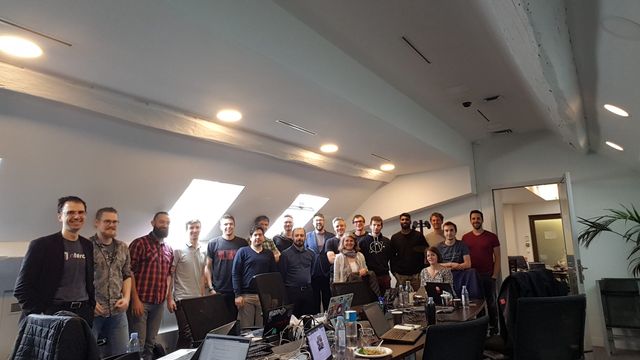
From June 3rd to June 6th 2019, thirty-five developers from the Jupyter community met in Paris for a four-day workshop on dashboarding with Project Jupyter.
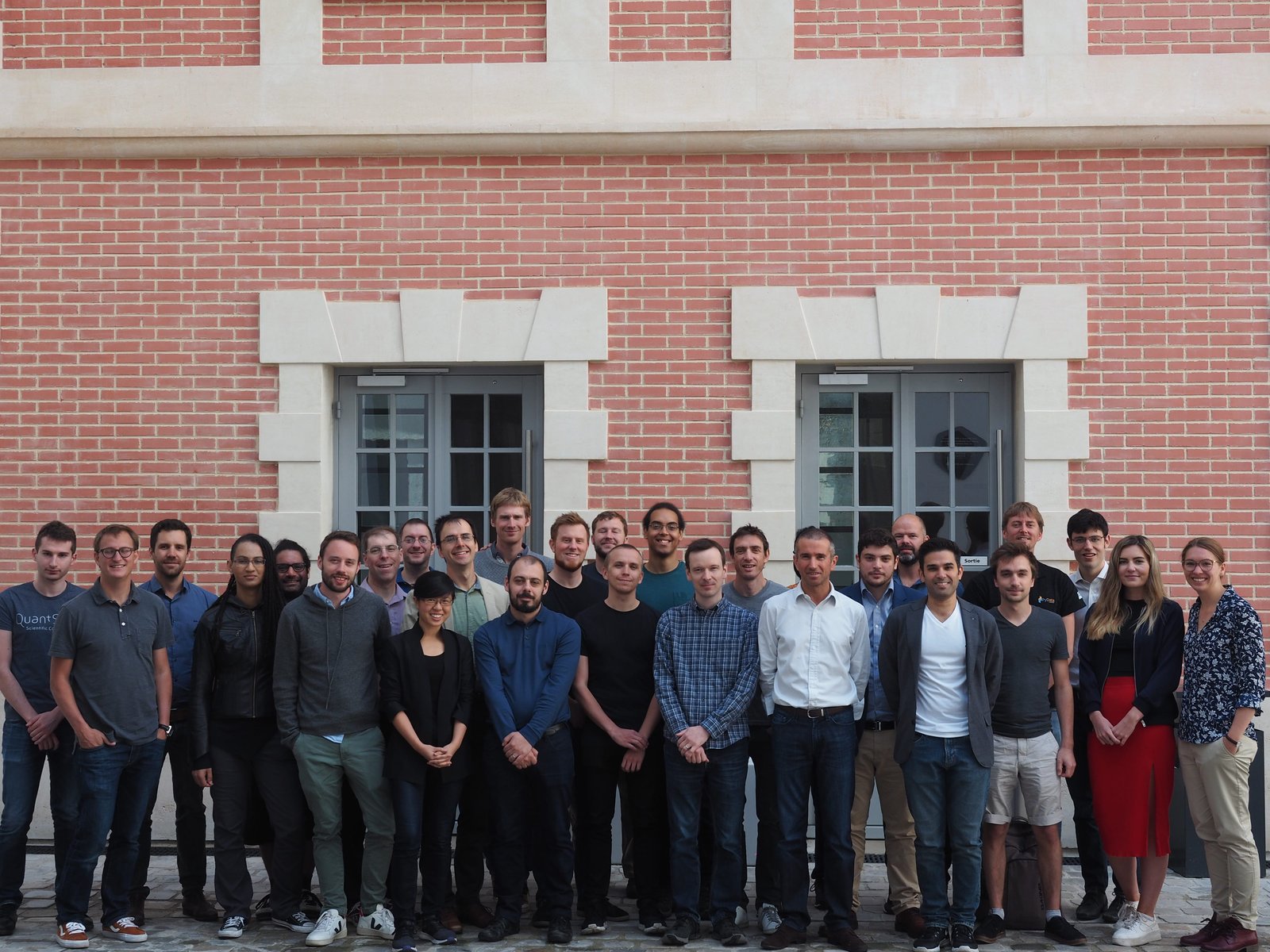
For four days, attendees worked full time on the Jupyter project, including hacking sessions and discussions on improvements to Jupyter components and new development. We were lucky to count a large number of core developers to the project in the group.
Beyond the hacking sessions, each day was concluded with a series of presentations and demos of the progress made during the workshop. In partnership with the PyData Paris team, we had a special installment of the PyData Paris Meetup with
- an invited presentation by Emmanuelle Gouillart on Plotly Dash,
- a series of lightning talks by attendees of the workshop on their achievements, including a talk by Philip Rudiger on the first release of Panel, and an announcement of the first releases of Voilà and the Voilà Gallery.
We ended the week with a social evening at the QuantStack offices in Paris.
Why a workshop on Jupyter Dashboarding with Jupyter?
The Jupyter ecosystem is used extensively in scientific computing both in academia and industry, and a rich ecosystem of data visualization tools has been developed around the Jupyter widgets frameworks, from geographical data visualization to protein folding simulation.
However, the Jupyter ecosystem still did not provide a means for developers to transition from notebooks to stand-alone web applications that can be accessed by multiple users.
This has been a longstanding request from the community: provide better tools built upon the Jupyter stack to share results with students, peers, or the general public.
These are the challenges that we decided to tackle during that week. The workshop was attended by many Jupyter core developers.
Highlights of the week
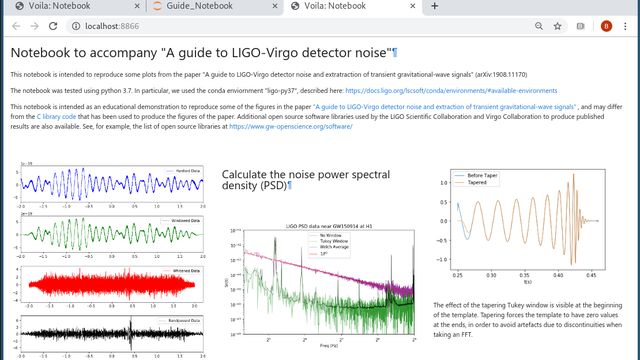
Many of the developers spent the week working on the Voilà and Panel projects. Both projects had their first public releases during that week (see the first public announcement of Panel and Voilà).
- During this week, a team of participants including Yuvi Panda, Pascal Bugnion, and Jeremy Tuloup iterated on the first version of the Voilà gallery. Several first-time contributors to the widget framework authored example dashboards for the gallery, showcasing their existing work. Yuvi also produced the first deployment scenarii for Voilà on Heruku.
- Cheryl Quah, from Bloomberg MC-ed a panel on dashboarding in the Jupyter ecosystem, including lots of questions and comparisons with Dash.
- Philip Rudigger started working on a Bokeh/ipywidgets integration for better interoperability between the two frameworks.
- Other contributors iterated on creating new Voilà templates, such as voila-vuetify, adding the ability to position Jupyter widgets and outputs in arbitrary location in the dashboard template. Grant Nestor created visual mockups for a UI for creating dashboard layouts in JupyterLab. Grant also helped iterating on logos for the project, and gave a presentation on dynamically loading JavaScript modules in the browser.
Acknowledgments
This event would not have been possible without the generous support provided by Bloomberg, who made this workshop series possible
We are grateful to Société Générale for funding the catering for the workshop.
The hosting of the workshop at CRI was paid for by QuantStack.
The public meetup was organized in partnership with the PyData Paris team.
Finally, we especially thank Ana Ruvalcaba from Project Jupyter for her incredible work on the logistics and finances of the Jupyter Community Workshop series.