
Voilà is now a Jupyter subproject
It is a great pleasure to announce that the Voilà project has been incorporated as a Jupyter subproject. Voilà will now be subject to the Jupyter governance and code of conduct.
For reference, the Jupyter Enhancement Proposal (JEP) for the Voilà incorporation is available here.
What is Voilà?
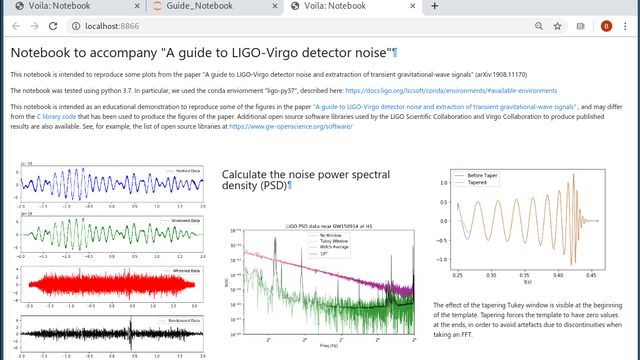
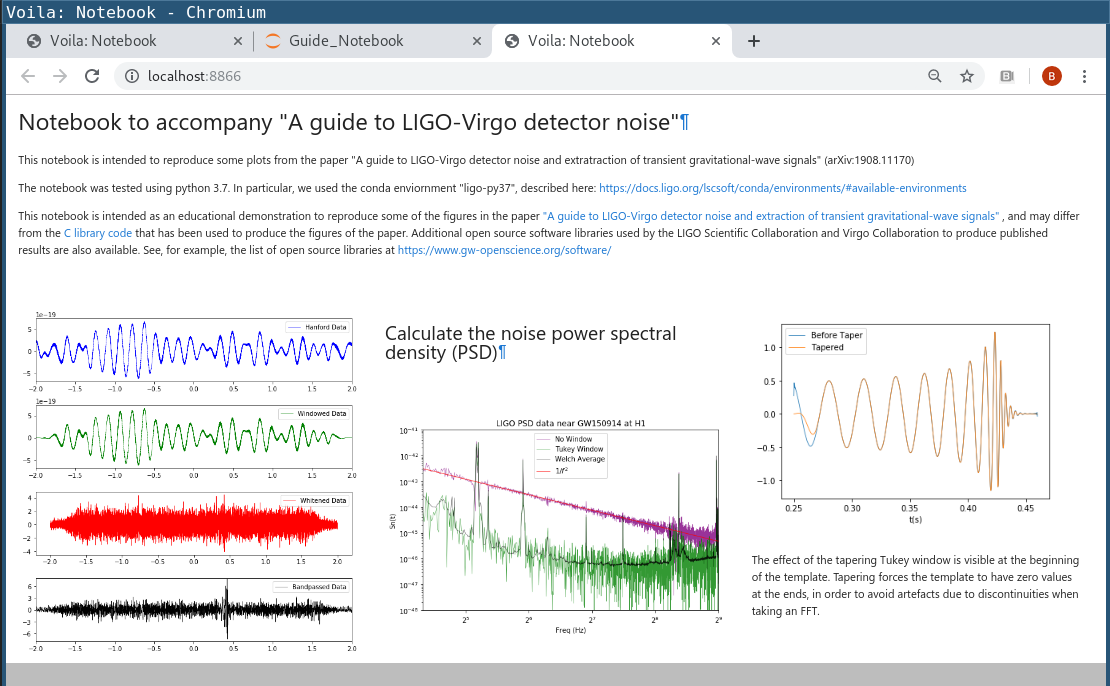
Voilà helps you communicate insights, by transforming a Jupyter Notebook into a stand-alone web application you can share. It gives you control over what your readers experience in a secure and customizable interactive dashboard.
The easiest way to get started with Voilà is to install it via pip or conda and type voila some_notebook.ipynb to turn the said notebook into a dashboard.
Besides, Voilà includes a templating system that allows to overload the behavior of the front-end. Using this templating system, Voilà can be used to create
- slideshows (with voila-reveal)
- dashboards (with voila-gridstack)
Why moving Voilà under the Jupyter governance?
While the project was initially started by QuantStack, the team now comprises developers from Bloomberg, UC Berkeley, JP Morgan, and Cal Poly San Luis Obispo. OVH has been supportive of the project by kindly providing the free hosting of the gallery on their infrastructure.
We believe that the multi-stakeholder nature of the Voilà project is well-suited for the Jupyter organization.
The Voilà project is largely built upon Jupyter subprojects and standards.
- The standard notebook file format is the main entry point to Voilà.
- nbconvert is used for the conversion to progressively-rendered HTML.
- naturally, we use jupyter_client for handling the execution of notebook cells
- jupyter_server is the default back-end.
- JupyterHub is at the foundation of the voila-gallery project.
- JupyterLab components (mime renderers, input and output areas) are used in the front-end implementation. Voilà also includes a preview JupyterLab extension.
- ipywidgets and custom jupyter widget libraries such as bqplot, ipyvolume, ipyleaflets provide the bulk of the interactivity of Voilà applications.
Voilà is more a remix of existing Jupyter components (with changes to enable that use case) than a completely new application.
Resources
Should you be interested in Voilà, feel free to try it on Binder or locally! You can also engage with the developer community during our public team meetings and the various GitHub repositories of the project:
- the Voilà GitHub repository is available here: https://github.com/voila-dashboards/voila.
- the Documentation is hosted on Read the Docs: https://voila.readthedocs.io.
- the Team Compass holds the calendar for the public developer meetings, as well as the meeting minutes: https://voila-dashboards.github.io.
- the Announcement of the first Voilà release was published on this blog: https://blog.jupyter.org/and-voilà-f6a2c08a4a93
Acknowledgements
- Voilà was started by the team of open-source developers at QuantStack as a separate project, but with the full intent to incorporate it into Jupyter. The initial project development at QuantStack was funded by Bloomberg.
- Now, Voilà contributors work in many institutions, including UC Berkeley, Cal Poly San Luis Obispo, JP Morgan, and Faculty (formerly ASI Data Science).
- The Voilà Gallery is kindly hosted by OVH.