

Teaching and Learning with Jupyter
From the early days — even before the Jupyter name — many of us foresaw that the IPython Notebook and the ecosystem of tools growing around it would be a “killer app” for education. But how could we imagine that Jupyter would be at the epicenter of the data science shake-up of tech jobs, reskilling, and educational innovation?
#scipy2014 keynote @LorenaABarba says “IPython Notebooks are the Killer App for teaching (science and engineering).”
Today, Jupyter is the technology behind the most innovative educational programs in data science, and is platform-of-choice for tutorials, workshops, online lessons, and even books. So I decided it’s a good time to collect the knowledge and experience of early adopters of Jupyter for teaching, combine it with reflections of scholars of education, and write an open book: a Handbook for Teaching and Learning with Jupyter.
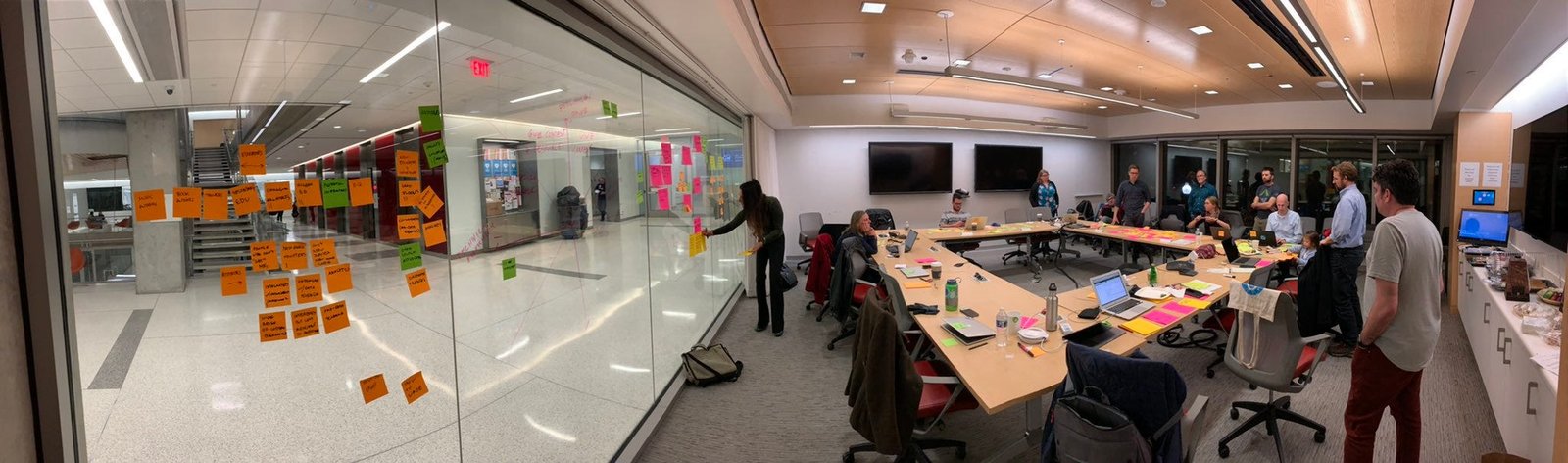
On Nov. 28–29, 2018, I welcomed fifteen researchers, educators and STEM faculty at the George Washington University, in Washington, D.C., for a book sprint — in two and a half days, we collaboratively wrote the first draft of this handbook, and immediately published it online at jupyter4edu.github.io. The open book continues to be edited and added to via an open-development model on GitHub, with dozens of pull requests merged in its first month.
Ready to start writing today, post-it notes everywhere #Jupyter4Edu
— Lorena Barba @labarba@fosstodon.org (@LorenaABarba), November 29, 2018
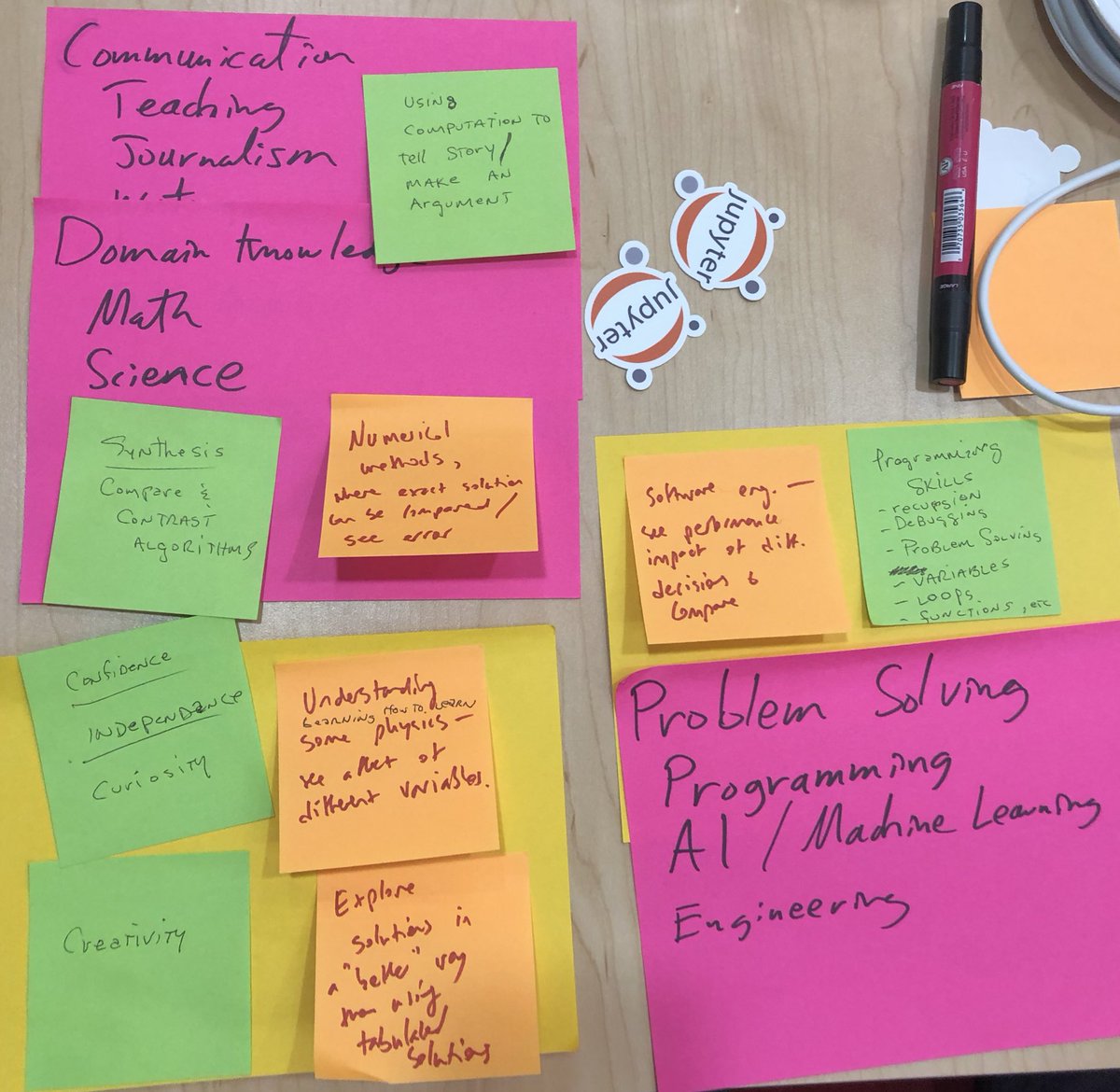
The book covers the following topics:
- Why we use Jupyter notebooks for teaching, the learning benefits and some anecdotes from our own experiences
- What we do with Jupyter, with lots of examples and tips for incorporating notebooks into a lesson or course
- A catalogue of pedagogical patterns with notebooks, drawn from our own experience and examples from others
- The Jupyter Notebook ecosystem, focusing on the tools that are most useful for teaching and learning
- Getting your class going with Jupyter: all you need to know about options for installing software, infrastructure options, distributing and collecting materials, assessing student work, and more
- Usage case studies, including large-scale adoption, single courses, and notable teaching materials published as notebooks
Book link: jupyter4edu.github.io
Jupyter continues to grow in popularity for teaching data science and computation not only in STEM fields, but also data journalism, business and quantitative economics, data-based decision sciences and policy, quantitative health sciences, and digital humanities.
For educators newly adopting Jupyter, navigating the ecosystem of tools and content can be overwhelming. They could study many examples, and consume myriad blog posts and talk videos to distill the patterns of good practices and technical solutions to best serve their students. Our open book aims to be the entry point for educators who want to use Jupyter to empower their teaching. We hope it will grow to encompass all you need to know about Jupyter in teaching and learning.
The book sprint was supported by a grant from Bloomberg to Project Jupyter for holding Jupyter Community Workshops last year, which provided funding for the participants’ travel and event catering. The grant was managed by NumFOCUS (fiscal sponsor for Project Jupyter). Meeting space was provided free of charge by the George Washington University, and the group was fêted at a reception sponsored by Leidos.
Tweet with #jupyter4edu to let us know what you think!
Book-sprint participants, with their bios, at: https://osf.io/uqz4j/wiki/Participants/
Book link: jupyter4edu.github.io